Surface finishing has evolved from a labor intensive task to an engineering process that is precision-driven. In the modern manufacturing industry of today, coating quality is directly tied to the durability, resistance to corrosion, and perception. To keep up with the demands of clients who are looking for flawless finishes, and increasing global standards, a lot of manufacturing facilities are turning to paint robots.
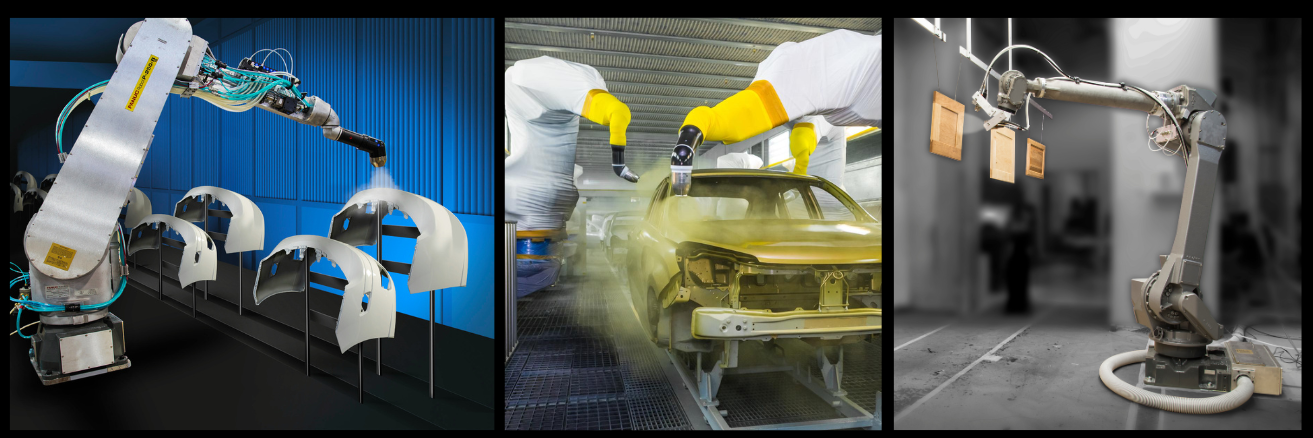
Image credit: automatedsolutions.com.au
A modern paint robot brings structured motion and programmable accuracy to applications that once depended on operator technique. Manufacturers eliminate inconsistencies such as uneven film formation or excessive material consumption by automating paint path, speed and angles for application. The result is a reliable coating process that allows for higher First Time Quality and reduced work-over time.
Consistency, efficiency, and measurable improvements
The human factor or slight variations in the technique could result in variations in thickness and coverage of manual paint. Paint robots eliminate this variability by employing the exact motion patterns throughout every cycle of production. This kind of repetition provides an uniform surface finish and a uniform distribution of material across every component.
A robotic paint system could enhance transfer efficiency. Overspray can be minimized by maintaining a certain distance between the applicator, and the part. This allows more paint to penetrate the target surface. A reduced amount of material waste can lead to cost savings while reduced emission of volatile organic compounds helps in ensuring environmental compliance.
Paint robotics that integrates fluid handling allows for the precise mixing ratios of coatings made of multiple components. It eliminates any irregularities that can compromise the integrity of the finish. By combining stable flow control with programmable parameters, manufacturers can modify atomisation patterns and spray pattern settings in real time.
Safety and productivity
The main benefit of implementing an automated painter is improved uptime. Paint cells that are robotic are more efficient than manual operation because they are able to operate with no interruption. Once they are programmed, they can ensure continuous throughput with no interruptions or constant supervisory supervision.
It is crucial to think about the safety of any establishment that utilizes bi-component solvents or solvent-based coatings. Paint atomised can cause hazardous conditions, particularly when working with materials that are flammable or reactant. Modern paint robots can work safely in difficult environments. This lowers the risk of exposure to harmful chemicals and enhances the safety of workers.
The technology of conveyor tracking boosts productivity by allowing robotic painting of components while they are moving. This technology lets you work on a wider space and assists in keeping production lines moving efficiently.
Australian Automation Expertise Supporting Industry
For those who want to modernize their finishing operations having access to a skilled automation partners is vital. Automated Solutions in Australia has earned a reputation of providing high-end robotic integration services. As FANUC certified robotic integrators who have extensive experience in automation engineering, the team supports businesses to implement custom robot paint solutions that align with their business goals.
Automated Solutions helps manufacturers evaluate their processes, and design robotic paint cells by combining technological expertise and industry knowledge. With the help of collaborative planning, simulations and system integration, businesses can understand the anticipated improvements in performance prior to installing.
Paint robotics encompasses more than only automation. It is about improving safety, quality and efficiency. Paint robot systems that are well-designed can transform finishing on surfaces into a consistent, reliable and controlled operation. Assistance from automation experts will assist manufacturers in improving their competitiveness and guarantee the long-term development of a competitive market.